
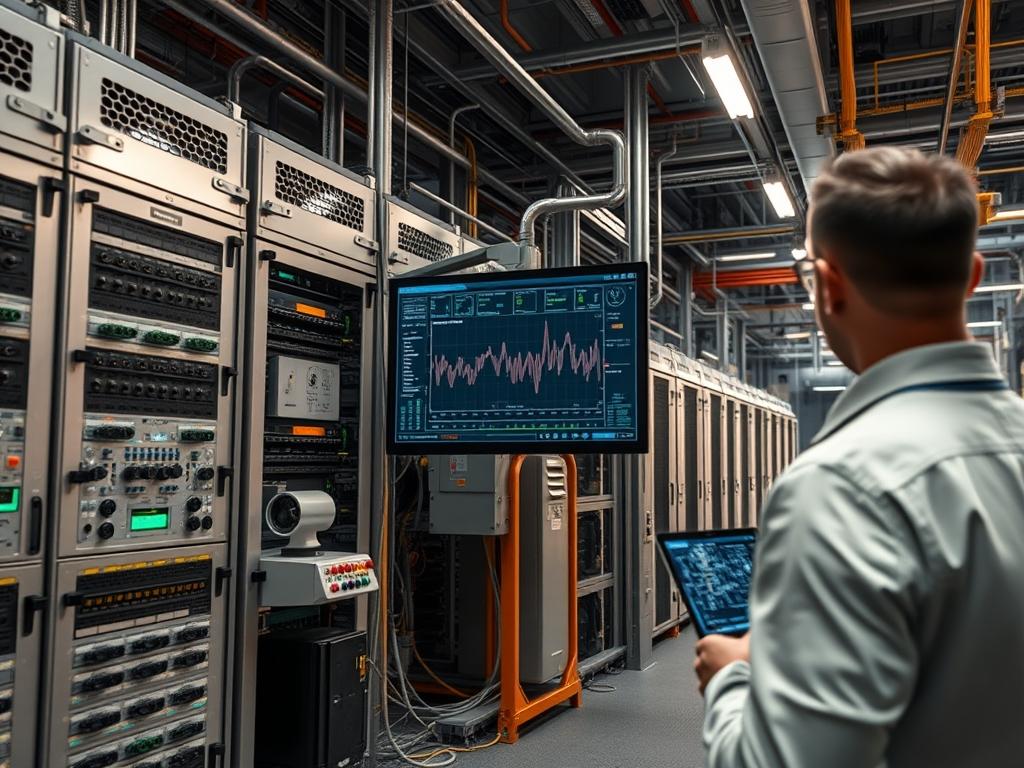
API Event Driven Design replaces synchronous polling and blocking HTTP calls with asynchronous notification mechanisms. This architecture mitigates the distributed monolith problem where downstream service latency cascades upward, eventually exhausting thread pools in the calling service. By using an intermediary broker, producers publish state changes as discrete events while consumers subscribe to specific topics or queues. This shift moves the system reliability burden from the transport layer to the message persistence layer. In high-concurrency environments, such as industrial sensor arrays or financial transaction engines, this design ensures that temporary network partitions do not result in data loss. Instead, messages are held in durable storage until the consumer acknowledges receipt. This decoupling allows for independent scaling of services and improves fault tolerance by isolating failures within specific service domains. Operational dependencies transition from real-time service availability to message broker stability and disk I/O throughput for write-ahead logging. Failure impacts are limited to data freshness rather than total system downtime: a characteristic essential for high-availability infrastructure.
Technical Specifications
| Parameter | Value |
|—|—|
| Primary Protocols | AMQP 0-9-1, MQTT 5.0, Apache Kafka, gRPC |
| Default Communication Ports | 5672 (AMQP), 1883 (MQTT), 8883 (MQTTS), 9092 (Kafka) |
| Standard Serialization | Protocol Buffers, Apache Avro, JSON Schema |
| Typical Memory Thresholds | 8GB minimum for broker heap: 32GB+ for production |
| Network Requirements | < 10ms internal latency: 1Gbps minimum throughput |
| Persistence Layers | XFS or EXT4 with write-back caching disabled |
| Security Protocols | TLS 1.3 with mTLS authentication |
| Recommended Instance Type | Compute-optimized with NVMe local storage |
| Concurrency Target | 50,000+ concurrent publishers per cluster node |
Configuration Protocol
Environment Prerequisites
Implementation requires a distributed message coordinator to handle state persistence. For Linux environments, ensure the ulimit for file descriptors is increased to at least 65535 to prevent socket starvation during peak event bursts. You must install OpenSSL 1.1.1 or higher for secure transport. Required permissions include CAP_NET_BIND_SERVICE for the service user if binding to privileged ports. The underlying network must support TCP keepalives to prevent idle connections from being terminated by intermediary firewalls or load balancers.
Implementation Logic
The engineering rationale for this transition targets the removal of temporal coupling. In a request-response model, the producer must wait for the consumer to process the data, which creates a blocking state in user-space. Through event-driven design, the producer hands off the payload to the broker and immediately resumes its execution thread. The broker ensures the message is committed to the write-ahead log (WAL) before acknowledging receipt to the producer. This encapsulation ensures that if the consumer service fails, the event remains in the queue or partition. Failure domains are restricted to the broker itself, which is typically hardened via clustering and Zookeeper or Raft consensus algorithms to maintain a consistent state.
Step By Step Execution
Provisioning the Message Broker
Initialize the broker service and configure the exchange-binding logic. For RabbitMQ, use the rabbitmqctl command to establish virtual hosts and user permissions.
“`bash
Define a virtual host for the event domain
rabbitmqctl add_vhost /production_events
Create an administrative user with strong entropy password
rabbitmqctl add_user event_admin SECURE_PASSWORD_STRING
Grant full permissions to the virtual host
rabbitmqctl set_permissions -p /production_events event_admin “.” “.” “.*”
“`
This configuration creates an isolated environment where different architectural domains cannot interfere with each other’s message streams.
System Note: Monitor the Erlang VM memory usage via rabbitmq-diagnostics to ensure the memory watermark does not trigger a publisher block.
Defining Schema Constraints
Implement a schema registry to ensure that all published events adhere to a predefined structure. This prevents malformed data from entering the pipeline, which could cause consumer-side service crashes. Use Protobuf for high-efficiency binary serialization.
“`protobuf
syntax = “proto3”;
message SystemEvent {
string event_id = 1;
string timestamp = 2;
string origin_service = 3;
bytes payload = 4;
}
“`
Compile the schema into native code for your producer and consumer languages to ensure type safety.
System Note: Use protoc to generate your binding libraries. Any version mismatch between the producer schema and consumer schema will result in serialization errors during the unmarshal phase.
Implementing Consumer Idempotency
Consumers must be designed to handle the same event multiple times without side effects. This is critical for at-least-once delivery guarantees. Implement a tracking table in a local database to log processed event_id values.
“`sql
CREATE TABLE processed_events (
event_id UUID PRIMARY KEY,
processed_at TIMESTAMP DEFAULT CURRENT_TIMESTAMP
);
“`
When a message is received, the consumer checks this table within a transaction before executing business logic.
System Note: If the database transaction fails, the consumer must not acknowledge (ACK) the message to the broker. This forces a redelivery.
Dependency Fault Lines
Event-driven architectures introduce specific failure modes related to asynchronous state management.
1. Consumer Lag: This occurs when the consumption rate is lower than the production rate. The broker’s disk usage will climb as the message backlog grows. Root cause is often unoptimized database queries in the consumer logic. Monitor this using the messages_ready metric in your broker.
2. Poison Pill Messages: A specific event format causes the consumer to crash repeatedly. Because the message is never acknowledged, the broker keeps redelivering it, creating a crash loop. Remediation requires a Dead Letter Queue (DLQ) where such messages are routed after a fixed number of retries.
3. Network Partitions: In a clustered broker environment, a network split can lead to a “split-brain” scenario. Verification involves checking the cluster status via rabbitmqctl cluster_status or kafkacat. Ensure it uses a majority-based consensus to prevent data divergence.
4. Library Incompatibilities: Using different versions of an AMQP or Kafka client library across microservices can lead to heartbeat timeouts or frame errors. Standardize on a single stable version across the infrastructure.
Troubleshooting Matrix
| Symptom | Verification Command | Remediation |
|—|—|—|
| Connection Timeout | nc -zv broker_ip 5672 | Check iptables and firewall rules. |
| High Disk I/O | iostat -xz 1 | Upgrade to faster NVMe disks or increase node count. |
| Unacked Messages | rabbitmqctl list_queues name messages_unacknowledged | Check consumer health and network connectivity. |
| Kernel Panic | dmesg | grep ‘Out of memory’ | Adjust OOM Killer scores for the broker process. |
| Topic Lag | kafka-consumer-groups.sh –describe | Increase partition count or optimize consumer threads. |
Log Analysis
Inspect the service logs via journalctl to identify transport layer errors:
“`bash
Check for broker socket errors
journalctl -u rabbitmq-server.service | grep “connection_closed_abnormally”
Inspect consumer logs for serialization failures
tail -f /var/log/consumer_service.log | grep “Unmarshalling error”
“`
Typical error codes like ECONNRESET indicate the broker closed the connection due to a protocol violation or a timeout.
Optimization And Hardening
Performance Optimization
To reduce latency, enable TCP_NODELAY on your producer sockets to bypass the Nagle algorithm. For high-throughput requirements, use batch publishing where multiple events are bundled into a single network frame. Tuning the kernel-space network buffers via sysctl is also necessary:
“`bash
sysctl -w net.core.rmem_max=16777216
sysctl -w net.core.wmem_max=16777216
“`
This increases the maximum buffer size for sent and received packets, allowing for larger window sizes in high-bandwidth environments.
Security Hardening
Isolate the message broker in a private subnet with no direct internet access. Use mTLS (Mutual TLS) where both the client and server present certificates. This prevents unauthorized producers from spoofing events. Implement strict Access Control Lists (ACLs) at the broker level to ensure that a service can only write to its designated topics and read from its authorized queues.
Scaling Strategy
Implement horizontal scaling by increasing the number of partitions in your topics. In a Kafka environment, the number of partitions determines the maximum number of concurrent consumers in a single consumer group. For RabbitMQ, use the Shovel plugin or Federation to distribute load across geographical regions. Load balancing should be handled at the DNS or transport level using HAProxy with a least-connection algorithm to distribute new producer sessions.
Admin Desk
How do I handle out-of-order events?
Use sequencing keys or timestamps within the event payload. Consumers should maintain a local state of the last processed sequence number and buffer future events if a gap is detected, ensuring data integrity during retransmission or multi-path routing.
What is the primary cause of broker memory pressure?
Accumulating unacknowledged messages in queues is the most frequent cause. If consumers fail to send an ACK, the broker must keep the message in memory or move it to disk, eventually exhausting resources and triggering publisher throttle mechanisms.
Can I use WebSockets for event-driven APIs?
Yes, WebSockets are suitable for pushing events to client-side applications. Use an ingress controller like NGINX to handle the upgrade request and proxy the connection to a backend event-service that subscribes to the internal message broker.
How do I prevent data loss during a broker crash?
Configure your producers to use persistent delivery modes and ensure your queues are marked as durable. The broker must be configured to synchronize the write-ahead log to physical disk before acknowledging the message to the producer.
When should I use a Dead Letter Queue?
Route messages to a DLQ after a specific retry count (e.g., 5 attempts) results in failure. This prevents “poison pill” messages from blocking a queue while allowing administrators to inspect and replay the failed events after fixing the consumer.